Journey through time on the Bosphorus and uncover the Ottoman legacy that shaped Istanbul’s palaces, fortresses, and waterfront mansions along this historic strait.
The Bosphorus Strait is more than a scenic waterway it’s a living museum of Ottoman history. Stretching between Europe and Asia, this 30-kilometer channel witnessed the rise and transformation of one of the greatest empires in history. Every palace, fortress, and mansion lining its shores tells a story of power, art, and diplomacy that defined Istanbul’s golden centuries.
The Strategic Heart of an Empire
For the Ottoman Empire, the Bosphorus wasn’t just a natural boundary it was a strategic artery. Controlling this narrow passage meant commanding the gateway between the Black Sea and the Mediterranean. Sultans built fortresses, naval bases, and palaces along its banks to protect trade routes and showcase imperial dominance. The strait became both a military stronghold and a symbol of prestige.
- Rumeli Fortress (Rumeli Hisarı): Built in 1452 by Sultan Mehmed II, it played a key role in the conquest of Constantinople.
- Anadolu Fortress (Anadolu Hisarı): Constructed decades earlier on the Asian shore, it served as a defensive counterpart to Rumeli Hisarı.
- Bosphorus Palaces: Later centuries saw these forts replaced by opulent waterfront residences for sultans and statesmen.
Imperial Palaces Along the Shore
During the 19th century, as the empire modernized, Ottoman sultans commissioned magnificent palaces that blended European elegance with traditional design. These structures transformed the Bosphorus into a royal boulevard of marble and gold.
| Palace | Era | Architectural Style | Notable Features |
| Dolmabahçe Palace | 1856 | Ottoman Baroque & Neoclassical | Crystal staircase, grand ballroom, 285 rooms |
| Çırağan Palace | 1871 | Neo-Ottoman | Marble façade, private bridge to Yıldız Palace |
| Beylerbeyi Palace | 1865 | Second Empire & Ottoman eclecticism | Summer residence for foreign dignitaries |
Waterfront Mansions and Yalı Culture
Beyond palaces, the Ottoman elite constructed hundreds of yalıs, wooden waterfront mansions that lined both sides of the Bosphorus. These private residences reflected the refinement of Ottoman high society, with ornate interiors, private piers, and gardens descending into the sea. Many still survive today, restored as luxury homes or cultural landmarks.
- Yeniköy and Arnavutköy: Famous for 19th-century yalıs with colorful facades.
- Kuzguncuk and Kandilli: Quiet neighborhoods on the Asian shore, showcasing traditional Ottoman residential design.
- Historical Function: Served as summer retreats for sultans, viziers, and ambassadors.
Religious and Cultural Landmarks
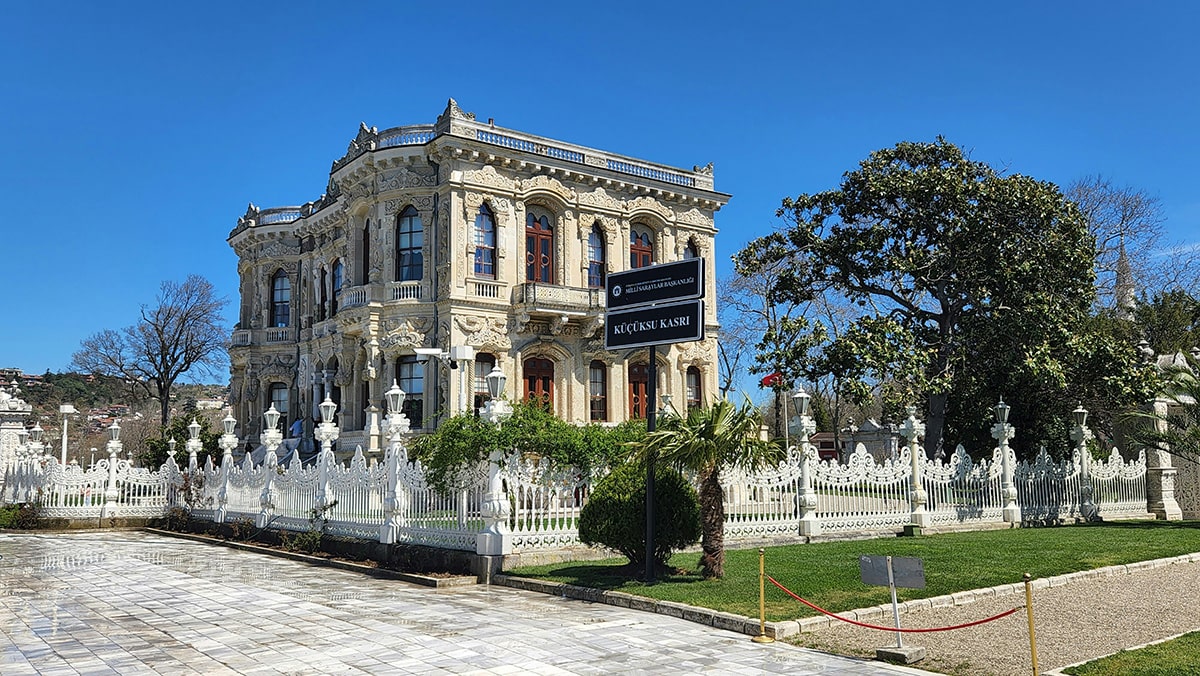
The Ottomans also adorned the Bosphorus with mosques and pavilions, harmonizing faith and aesthetics. One of the most iconic is the Ortaköy Mosque, commissioned by Sultan Abdülmecid I and designed by the Balyan family of architects. Its intricate stonework and waterfront location embody the empire’s artistic brilliance. Other landmarks, like the Küçüksu Pavilion and Hidiv Kasrı, served as leisure retreats, reflecting the sultans’ passion for architecture and nature.
Traces of Ottoman Legacy Today
Today, the Bosphorus remains a living corridor of Ottoman legacy. Many palaces and mansions have been restored and opened to the public as museums or hotels. Cruising along the strait offers not just scenic beauty, but a direct connection to the empire’s enduring influence on Turkish culture, architecture, and identity.
- Dolmabahçe Palace: Now a museum showcasing royal art and furnishings.
- Beylerbeyi Palace: Open for guided tours featuring the summer life of Ottoman sultans.
- Yıldız Palace Complex: A hidden gem nestled among gardens near Beşiktaş.
Final Thoughts
Exploring Ottoman history along the Bosphorus is like sailing through the pages of a grand historical chronicle. Each landmark from mighty fortresses to elegant palaces reflects the empire’s evolution from conquest to culture. Whether viewed from the deck of a cruise or explored up close, the Bosphorus remains the most poetic testament to the Ottoman Empire’s lasting glory.